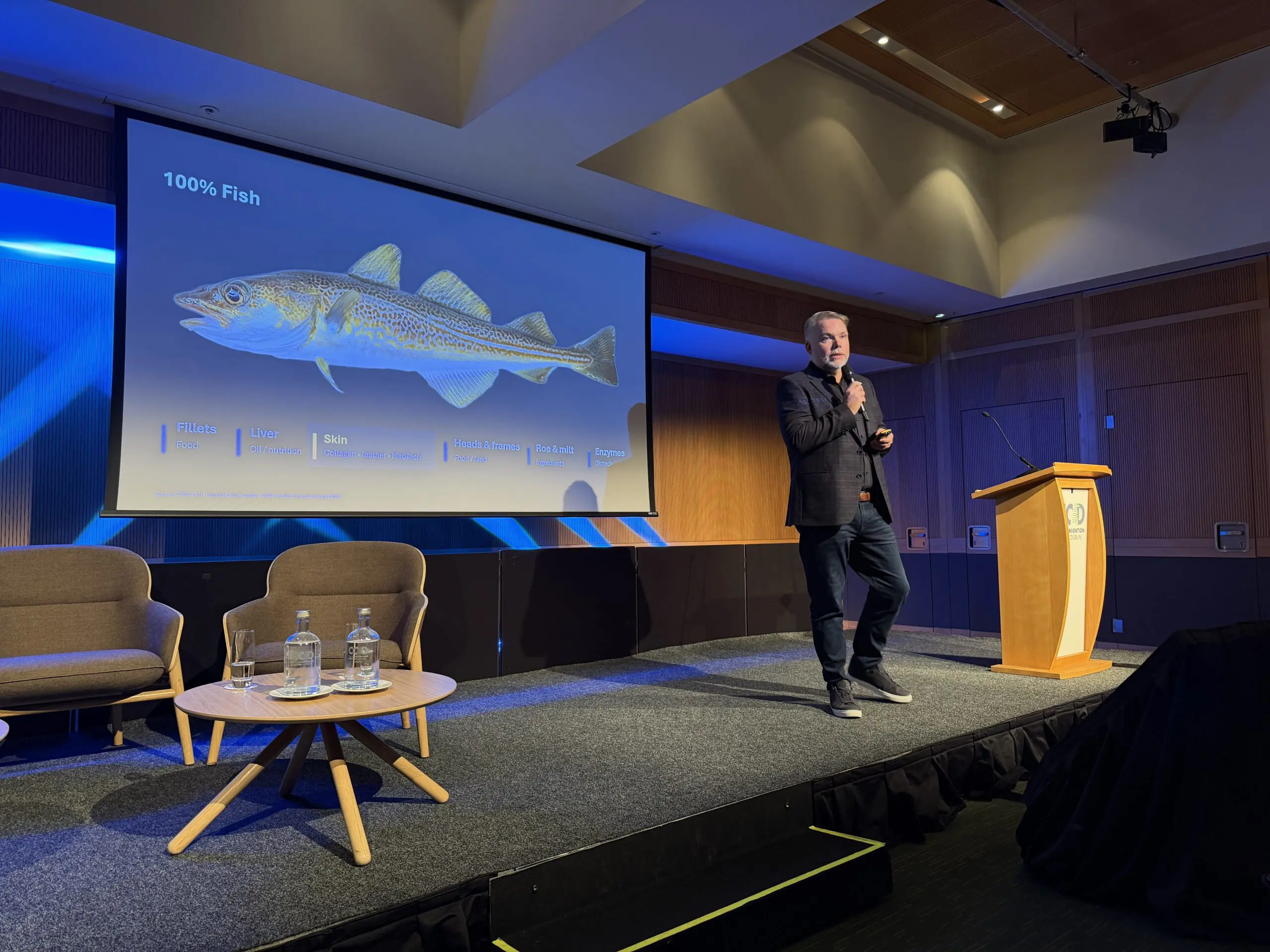
G. Fertram Sigurjonsson, founder of Arctell and Kerecis, delivered the opening keynote at Blue Ambition 2026 in Dublin on October 19, highlighting how Iceland’s seafood industry has learned to create greater value from limited marine resources and how that approach helped build a billion-dollar medical technology company.
The event, organised by Ireland’s Seafood Development Agency, Bord Iascaigh Mhara (BIM), in partnership with Hatch Blue, brought together entrepreneurs, researchers, investors and industry leaders to explore innovation and investment opportunities in the blue economy.
In his keynote, Fertram shared lessons from Iceland’s fishing industry, the journey of Kerecis from a small fishing town in the Westfjords to international success, and the opportunities for Ireland to create greater value from its own marine resources.
More value from a limited resource
Fertram highlighted how Iceland’s fishing industry has developed into a highly efficient, export-driven sector, shaped by limited fish stocks, a small domestic market and the need to compete internationally.
In 2025, Icelandic marine exports reached ISK 359 billion, representing nearly 39% of the country’s goods exports, while approximately 98% of seafood production is exported.
He presented figures showing how the industry’s economic performance has strengthened over time despite lower cod catches, illustrating that greater profitability does not necessarily require greater harvesting volumes.
A central part of that development has been the industry’s commitment to utilising the entire fish. Today, more than 90% of Icelandic cod is used commercially, with products ranging from food and nutritional ingredients to biotechnology and medical applications.
Fertram emphasised the importance of looking beyond traditional seafood products and recognising the potential value of materials previously regarded as waste.
From Atlantic cod skin to a billion-dollar company
As an example of that transformation, Fertram shared the story of Kerecis, which pioneered the use of intact Atlantic cod skin in medical technology for wound healing and tissue regeneration.
He explained how the company began by addressing a serious medical need rather than simply searching for a commercial use for fish skin.
Turning that scientific opportunity into an international business required years of research, product development, clinical evidence, regulatory approvals and investment.
Fertram also discussed the importance of building the right team, establishing reliable manufacturing and developing the commercial capabilities needed to compete in the United States and other international markets.
Kerecis grew from a small Icelandic startup into a global medical technology company, with annual revenues exceeding USD 100 million by 2023.
That same year, Danish healthcare company Coloplast acquired Kerecis in a transaction valued at up to USD 1.3 billion, making it Iceland’s first unicorn.
The company demonstrated how extraordinary economic value can be created from an existing marine resource without catching one additional fish.
The next Kerecis may emerge from an overlooked resource
Turning to Ireland, Fertram highlighted the opportunities for the country’s seafood industry to create more value from its existing catch.
According to BIM, Irish seafood landing volumes declined by 11% in 2025, while their value increased by 7% to €346 million. With fishing quotas under pressure, Fertram emphasised the importance of developing higher-value products rather than relying solely on harvesting volumes.
He discussed the potential to transform underutilised seafood co-products into ingredients, biomaterials, biotechnology products and medical applications.
However, the lesson from Kerecis extends beyond identifying promising raw materials.
Fertram stressed the importance of bringing together fishing companies, seafood processors, scientists, entrepreneurs, investors and policymakers to create an environment where new businesses can emerge.
Scientific discoveries must be connected to real customer needs, supported by investment, manufacturing capabilities, regulatory expertise and access to international markets.
The message was not that Ireland should attempt to replicate Kerecis, but rather that the country has an opportunity to build the conditions that allow similarly ambitious companies to emerge from its seafood industry.
The next Kerecis will probably not look like Kerecis. But the conditions that created it can be built deliberately.